
Essentiels de la planification et de l’ordonnancement de la maintenance pour une fiabilité et des performances élevées

Pourquoi participé?

Dans des secteurs toujours plus compétitifs comme la fabrication, les mines, l’énergie et les services publics, ainsi que le pétrole et le gaz, la direction demande généralement à la division de maintenance d’augmenter la disponibilité des actifs et des équipements avec des pannes mineures et des coûts inférieurs. Pour ce type de situation, les services de maintenance ressentent le manque de ressources. Les ordres de travail continuent d’arriver, mais peu sont exécutés.

Une étude de SMRP montre que le « temps de travail » moyen du personnel de maintenance disponible n’est que de 35 %. Cela signifie que dans une journée moyenne, le personnel de maintenance d’une organisation ne consacre qu’environ 3 heures et demie à effectuer les travaux de maintenance. Les heures restantes sont perdues en collecte de pièces, en déplacements, en réunions, en pauses et en d’autres activités « non productives » qui n’ont rien à voir avec la maintenance des actifs et des équipements.

Sans planification et planification appropriées, la maintenance est mal coordonnée, coûteuse et inefficace, ce qui empêche l’équipe de respecter les délais. Ces pannes poseront des problèmes constants au service Opérations, qui sera de plus en plus réticent à libérer du matériel à l’avenir. Cela peut directement contribuer à des coûts de maintenance plus élevés, à une exécution inadéquate de la maintenance et à une détérioration rapide de l’intégrité de l’usine.

À une époque où la main-d’œuvre en ingénierie vieillit et prend sa retraite, en période de pénurie de compétences à l’échelle de l’industrie et à l’échelle mondiale, le cours de 3 jours sur les principes essentiels de la planification et de la planification de la maintenance de Salvo enseigne à vos planificateurs de maintenance comment bien organiser le travail de maintenance et utiliser moins de mainteneurs. tout en augmentant la disponibilité opérationnelle et le débit à moindre coût. Le cours forme les participants sur les points clés et les meilleures pratiques de
planifier et planifier afin qu’à leur retour au travail, ils puissent utiliser les bonnes méthodes et pratiques dans l’opération. Des notes de cours substantielles et complètes sont fournies et les présentations PowerPoint complètes sont remises à chaque participant pour référence future.

Objectifs principaux

  • Protégez et améliorez la valeur des machines de votre usine grâce aux principes avancés de planification de la maintenance et aux meilleures pratiques d’ordonnancement.
  • Apprenez les rôles et les tâches d’un planificateur et d’un ordonnanceur de maintenance et créez des bons de travail de haute qualité.
  • Découvrez comment intégrer efficacement la maintenance centrée sur la fiabilité à la planification et à l’ordonnancement de la maintenance pour obtenir une disponibilité maximale des machines et une réduction essentielle des coûts de maintenance.
  • Maximisez vos profits grâce à une gestion efficace de la maintenance et au contrôle du cycle de vie des équipements

Qui devrait participé?

Ce cours est très pertinent pour les ingénieurs techniques et les professionnels qui gèrent et sont responsables de la maintenance de leur organisation ; ainsi que le bon fonctionnement général et les processus des usines et des machines de leur organisation. Ceux-ci incluent : les surintendants, les gestionnaires, les superviseurs, l’équipe
Dirigeants, chefs de département, ingénieurs, contremaîtres, planificateurs, directeurs des départements suivants :

  • Entretien
  • Mécanique
  • Entretien préventif
  • Fabrication
  • Maintenance prédictive
  • Gestion physique des actifs
  • Production
  • Fiabilité
  • Processus
  • Contrôle
  • Instrumentation
  • Ingénierie
  • Opérations
  • Plante
  • Transmission
  • Automatisation

Des industries suivantes :

  • Pétrole et gaz, services publics, fabrication, construction, pétrochimie/produits chimiques, fabrication, transport et transport ferroviaire, produits pharmaceutiques et soins de santé, mines, alimentation et boissons, etc.
  • Toutes les autres industries qui considèrent les compétences en leadership et la gestion des actifs physiques comme un facteur de réussite commerciale, comme la gestion des installations et les opérations.

Votre formateur

  • Il est un consultant de renommée mondiale très expérimenté avec plus de 30 ans d’expérience dans le domaine de la maintenance dans les domaines de la technologie des opérations, de l’analyse de la fiabilité de l’ingénierie et de la mise en œuvre.
  • Il a conçu et développé des programmes de formation spécialisés pour combler les lacunes de compétences identifiées qui entravent les avantages des opérations et des processus et les livraisons en temps opportun. Basé sur des outils de modélisation et de prédiction de la fiabilité, de conception de la fiabilité, de test et de gestion de la fiabilité.
  • Il a analysé, appliqué et documenté des outils et des techniques, notamment l’analyse des défaillances, l’évaluation et le classement des risques, l’analyse des causes profondes, l’effet des modes de défaillance et l’analyse de la criticité pour les entreprises Fortune 500 du monde entier.
  • Il est passionné par la fiabilité et l’amélioration continue, et s’engage à favoriser le PWW/LRS (Plant Wellness Way/Lifetime Reliability Solutions) grâce à l’élimination des pannes, à l’excellence de la fiabilité, à la maintenance productive totale (TPM), à la maintenance préventive et prédictive, aux stratégies CBM et RCM.

Les organisations qui ont bénéficié de l’expertise de Thomas comprennent :

  • Anglogold Ashanti
  • Total
  • BHP Billiton
  • DP World Dakar
  • Bissa Gold
  • Shell

Request Schedule or
Book In-House Training

Combinez cette formation avec ANALYSE DES MODES DE DEFAILLANCES DE LEURS EFFETS ET (AMDEC)

VOIR LES DÉTAILS

Ce cours se déroulera en langue française

AFFICHER EN LANGUE ANGLAISE

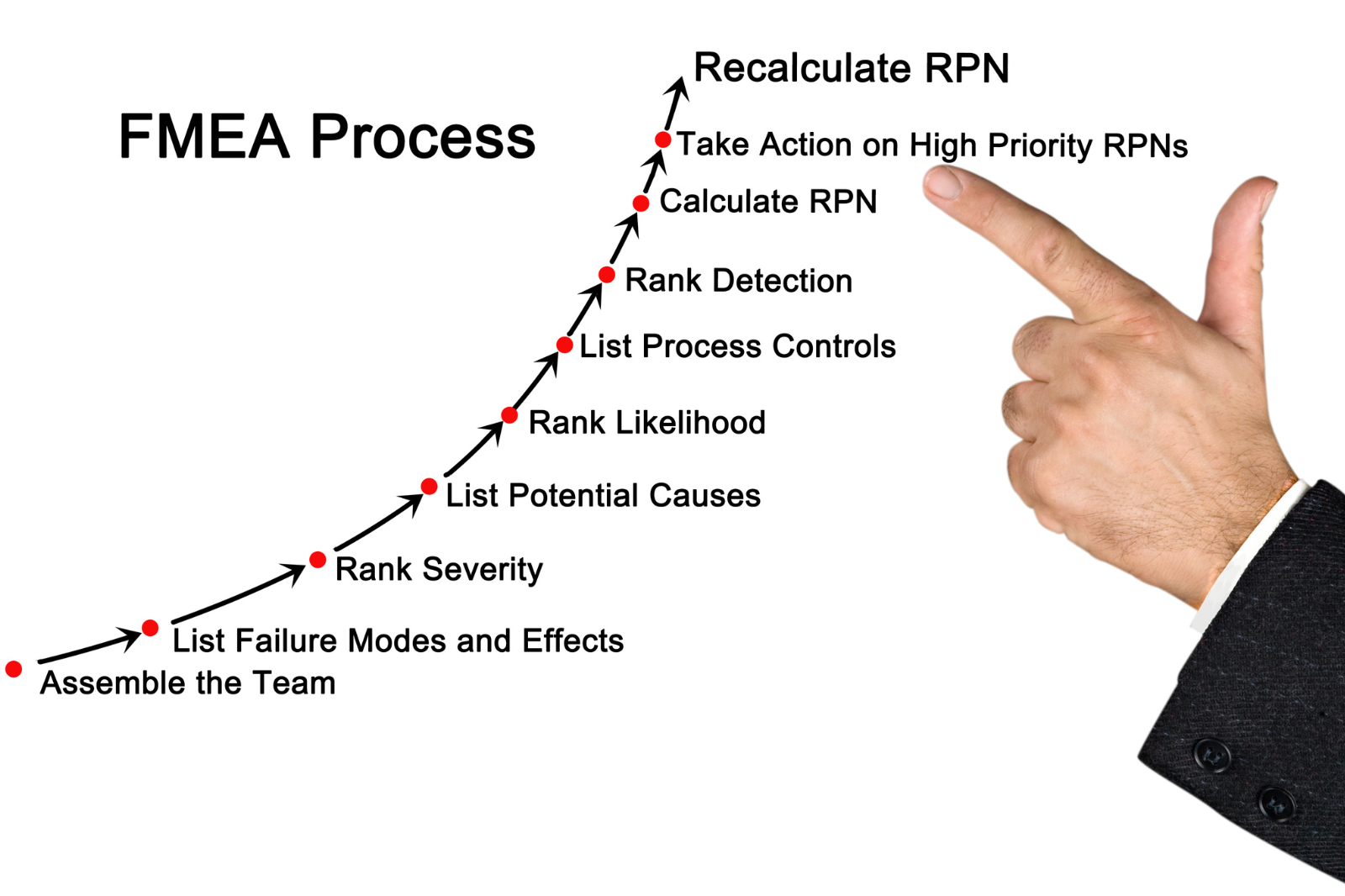
Failure Modes, Effect, and Criticality Analysis

The need for asset integrity is a key driver for any industry. Improving maintenance and reliability ensures the optimum performance of assets against a backdrop of regulatory, safety and cost pressures. Maintenance needs to improve the integrity and availability of assets while minimizing costs. FMECA is a methodology for predicting potential failures and the consequences of those failures. The output of the analysis is used to direct effort appropriately into preventing failures, with the overall aim of reducing the risk of failure to an acceptable level. Criticality analysis is a key technique for understanding which items of equipment, or systems, are most important to operations. Knowing which items are most critical allows engineers to prioritize maintenance effort into the most beneficial and necessary areas for the business. When applied effectively criticality analysis and FMECA both result in optimizing equipment maintenance policies that save money and increase reliability.

Salvo Global’s online masterclass is intended to provide a solid foundation of the Design Failure Modes and Effects Analysis (DFMEA) or Failure Modes, Effects and Criticality Analysis (FMECA) based on defined industry standards and requirements. Mastering the content will improve product quality, reliability, and launch effectiveness.

Top Learning Objectives

  • Apply RCFA, 5 Why and FMEA methodologies in failure investigation
  • Think through the possibilities of physical root causes of a failure that go beyond a quick fix
  • Recognize the presence of event chains leading to a failure and analyze causes behind the causes
  • Verify or disprove contributing causes
  • Identify actions or recommendations that will avoid a repetition of the failure or problem investigated
  • Create a fault tree of an incident

Who Should Attend?

This course is very relevant to technical engineers and professionals who handle and are responsible for their organizations’ maintenance; as well as the overall smooth operations and processes of their organizations’ plants and machineries. These include Superintendents, Managers, Supervisors, Team Leaders, Heads of Department, Engineers, Foreman, Planners, Directors of the following departments:

  • Maintenance
  • Mechanical 
  • Preventive Maintenance
  • Manufacturing
  • Predictive Maintenance 
  • Physical Asset Management
  • Production
  • Reliability
  • Process
  • Control
  • Instrumentation
  • Engineering
  • Operations
  • Plant
  • Transmission
  • Automation
  • Inspection

From industries including but not limited to:

  • Oil & Gas, Utilities, Manufacturing, Construction, Petrochemicals/Chemicals, Manufacturing, Transportation & Rail, Pharmaceuticals & Healthcare, Mining, Food & Beverages, etc.
  • All other industries that see leadership skills and physical asset management as a factor to business success such as facilities management and operations.

Trainer's Background

  • He is a highly experienced world-renowned consultant with over 30 years of experience in the Maintenance field in the areas of Operations Technology, Engineering Reliability Analysis and Implementation.
  • He has designed and developed specialized training curriculums to address identified skill gaps that hinder operations and processes benefits and timely deliveries. Based on reliability modeling and prediction, reliability design, testing and reliability management tools.
  • He analyzed, applied and documented tools and techniques including failure analysis, risk assessment and ranking, root cause analysis, failure modes effect and criticality analysis for fortune 500 companies around the world
  • He is passionate about reliability and continuous improvement, and committed in fostering PWW/LRS (Plant Wellness Way/ Lifetime Reliability Solutions) through failure elimination, reliability excellence, Total Productive Maintenance (TPM), Preventive, Predictive maintenance, CBM, and RCM strategies.

Request Schedule or
Book In-House Training

Combine this training with Essentials of Maintenance Planning & Scheduling

SEE THE DETAILS

This course will be conducted in French language

VIEW IN FRENCH LANGUAGE

Advanced Preventive and Predictive Maintenance

Maintenance’s key objective is to increase uptime without over-doing maintenance and the challenge lies in how to determine the right mix of Preventive Maintenance and Predictive Maintenance. Many organizations also find themselves struggling to put in place an effective Maintenance regime to improve equipment integrity.

The concept of Preventive and Predictive maintenance is extensively known and the potential benefits are widely accepted, but still, many maintenance practitioners have failed to successfully take advantage of the techniques and technology. By mastering techniques like the PF-Curve and Statistical Analysis and the latest condition monitoring techniques, participants will be able to prevent avoidable equipment failures and associated production losses and finally break the reactive maintenance cycle.

Salvo Global’s 3-day intensive Masterclass on “Advanced Preventive & Predictive Maintenance” is a practical “How-to-Do-it Guide” for implementing, measuring results and successfully applying today’s best practices for Preventive (PM) and Predictive Maintenance (PdM). In addition, delegates will be introduced to strategies that will enhance and improve PM & PdM.

Top Learning Objectives

  • Discover good practices of proactive maintenance (preventive and predictive maintenance)
  • Understand advanced concepts, techniques used to improve business processes
  • Demystify the types of maintenance and the tags of each type
  • Understand the pathological form of the equipment
  • Learn the mathematical engineering approach to monitoring equipment performance
  • Understand the forms of the failure and the chronic behavior of the equipment
  • Master analytical approach and improvement techniques
  • Learn the man-machine relationship, the systems used (GMAO, ERP, Data learning)
  • Comprehend human behavior and maintenance management
  • Understand the economic journey with maintenance maturity and its impact on all assets and their life cycle

Who Should Attend?

VPs, Directors, Division Heads, Managers, Superintendents, Specialists, Leaders, Supervisors, Foremen, Planners, Technicians, & Engineers from the following departments:

  • Maintenance
  • Engineering
  • Reliability
  • Preventive Maintenance
  • Predictive Maintenance
  • Shutdowns & Turnarounds
  • Condition Monitoring
  • Rotating Equipment
  • Static Equipment
  • Mechanical Engineering
  • Asset Management
  • Asset Integrity
  • Operations
  • Plant
  • Production
  • Process
  • Inspection

Trainer's Background

He has over 26 years of expertise in heavy industry, maintenance, reliability, project management, and operational excellence. He has also facilitated over 2800 workshop globally. He was a past Director of Asset Management and Operational Excellence. He managed and assessed global projects for large organizations in asset integrity, asset management, redefining maintenance and reliability management, operational management, operational optimization, and cost management, optimizing manufacturing footprints, system integrity, operations due diligence, training, coaching, and mentoring, and more.

EVENT SCHEDULE

Request Schedule or
Book In-House Training

This course will be conducted in French language

TRANSLATE IN FRENCH LANGUAGE

Combine this training with 2-Day Computerized Maintenance Management System

SEE THE DETAILS

“The trainer knew how to develop his subject very well, of which he had mastery. His explanations were really very clear and very well refuted. I would say the trainer was above our expectations, He knew how to develop his subject very well, of which he had mastery. His explanations were really very clear and very well refuted. For my part, I liked the way he gave us this training and also his sense of listening and answering all our questions properly.”

– Wahgnion Gold Operation


“The trainer has a very good level of knowledge. He knows his subject perfectly. Very professional. Very precise in his explanations. He is very attentive to all questions. He made sure at each step that the subject was well understood by the trainees before continuing with the training.”

– Perseus Mining

Cours avancé sur la Fiabilité et l’efficacité des pompes

Car de nos jours, de plus en plus d’entreprises se concentrent sur l’augmentation des bénéfices tout en maintenant la fiabilité, c’est une tâche difficile si l’équipe de maintenance et d’ingénierie manque de savoir-faire technique et d’expérience dans l’exploitation et la maintenance de l’un des équipements les plus importants, qui est la pompe.

Ce cours couvre les détails de la construction, les matériaux de construction, l’optimisation énergétique, l’assurance qualité et la maintenance des pompes centrifuges.

Après avoir assisté à ce programme, un utilisateur de pompe sera en mesure de décider sur le type de pompe le plus approprié pour une application spécifique, de finaliser les paramètres de service, d’estimer les performances hydrauliques de la pompe et de décider des spécifications matérielles et des caractéristiques de construction les plus appropriées. Il comprendra également les paramètres critiques des pompes qu’il doit examiner lors de l’évaluation des offres reçues des fabricants de pompes.

Objectifs Principaux

    • Comprendre comment le système de contrôle de la pompe
    • Apprenez à lire les courbes de pompage et comment fonctionnent réellement les pompes
    • Découvrez comment le débit affecte la fiabilité de la pompe
    • Déterminer la meilleure plage de fonctionnement fiable
    • Construisez et améliorez les systèmes de pompage et choisissez la pompe adaptée au travail qui améliorera la fiabilité
    • Éviter les problèmes de fonctionnement qui entraînent des pannes de la pompe
    • Comprendre la cavitation et pourquoi elle se produit et comment l’éviter
    • Appliquer les meilleures pratiques dans l’installation et la mise en service des pompes
    • Éviter les échecs de mise en service courants

Qui devrait être présent?

  • Responsables d’entretien
  • Ingénieurs de pompes et machines tournantes
  • Gestionnaire de l’usine
  • Chef de bureau des méthodes
  • Ingénierie
  • Gestion des installations
  • Production
  • Opérations
  • Assurance qualité

Le parcours du formateur

  • Plus de 30 ans d’expérience dans tous les aspects de la gestion de la maintenance, de la technologie d’exploitation, de l’analyse de la fiabilité de l’ingénierie et de la mise en œuvre.
  • Vaste expérience dans une grande variété d’expérience dans le secteur de l’industrie, y compris l’énergie et les services publics, le pétrole et le gaz, la pétrochimie, la fabrication.
  • Il a occupé des postes clés dans des sociétés telles que Flowserve, John Crane, ITT Goulds, ALCO Valves et Eagle Burgmann en Amérique, au Canada, au Royaume-Uni, au Moyen Orient et en Afrique.

Request Schedule or
Book In-House Training

Ce cours se déroulera en langue française
Voir en langue française

Gestion des prévisionnelle des compétences et management des talents

Développer et entretenir son capital de compétences et plus particulièrement de talents est plus que jamais vital pour l’entreprise.

Les incertitudes économiques, la volatilité des marchés, l’élasticité accrue de la demande, la compétition globale, l’accélération des phénomènes, la durée de vie des produits qui se réduit, requièrent une plus grande agilité de l’organisation qui se trouve dans l’obligation de s’adapter très rapidement à de nouveaux process, de nouvelles organisations, de nouvelles technologies.

A ces évolutions de l’environnement externe s’ajoutent une exigence accrue des salariés, en particulier des talents qu’il faut attirer, motiver, fidéliser, faire évoluer, en cohérence avec les intérêts de l’entreprise.

L’entreprise, quelle que soit sa taille se doit de mettre en place des dispositifs simples et flexibles de gestion des compétences et de la performance.

Objectifs Principaux

  • Clarifier la notion de talent au sein de la gestion des compétences et
    plus largement de la gestion des ressources humaines : les différentes
    approches (management des talents vs management des compétences?)
  • Assurer une intégration complète du management des talents dans la
    stratégie et les exigences opérationnelles de l’organisation
  • Comprendre la gestion des talents comme générateur de compétitivité
  • Savoir formuler le besoin en talents : diagnostiquer l’existant, mesurer les écarts avec les besoins actuels et futurs dans une perspective de création de valeur en intégrant les risques de pandémie
  • Savoir attirer, recruter et fidéliser les talents
  • Créer les condition de l’émergence des talents dans l’entreprise
  • Repérer développer, reconnaître les talents
  • Identifier les bénéfices et les risques de la gestion des talents
  • Savoir impliquer le management dans le dispositif de gestion des talents et améliorer le dispositif en continu

Qui devrait être présent?

  • Ressources Humaines
  • Gestion des talents
  • Plans de succession
  • Recrutement
  • Gestion des effectifs
  • Fidélisation
  • Relations sociales
  • Gestion des carrières
  • Politique RH
  • Planning et développement RH
  • Formation et développement RH
  • Gestion de la performance
  • Organisation
  • Planification stratégique
  • Gestion de l’emploi

Le parcours du formateur

  • Expert de renommée mondiale en gestion des ressources humaines et en développement organisationnel avec plus de 20 ans d’expérience comme formateur et consultant
  • Après des expériences de management opérationnel, il intègre comme concepteur et formateur, l’Institut de Formation et de Développement de Kiabi, leader français du prêt-à-porter. Cette expérience lui permet de développer une réelle expertise en ingénierie de la formation et en développement des compétences
  • Ses interventions comme consultant et formateur portent sur le management des équipes, la gestion de projets RH et de changements, la construction de dispositifs de gestion des compétences et de management des talents, auprès de groupes français ou internationaux

Demander un horaire ou Réserver une formation en entreprise

Ce cours se déroulera en langue française


Project Contract Negotiation and Management

Many project scopes are now executed via contracts. This allows organisations to meet their objectives by using resources outside the company boundaries, where suitable skills and knowledge often lie. Following successful pre-award and award stages, the contract must be managed well to gain the best results. A key time in a project’s life is when contract negotiation takes place. Whether negotiating with vendors for goods and services, or perhaps negotiating with a client for a scope of work, getting it wrong at this stage can seriously affect project outcomes and value for each party. All of this involves risk, and use of tried and tested risk management methods can help us to avoid pitfalls, capitalise on opportunity and improve performance in managing the contract.

This course will give you theory, process, techniques, insights, and ideas to help you do this. In addition, we will learn how to deal with common risks and problems that arise, such as poor contractor performance, poor communication, uncontrolled change, conflict, slippage, claims and disputes. Starting with a brief recap of both risk and contracting processes, we move on to how we can combine the two, with a particular focus on the phases of contract negotiation and contract management contract post award. This will help delegates to ensure that the contract delivers the results required, that the relationship between contract parties remains good and that difficulties and adverse events can be overcome.

Delegates should emerge from the course with a high degree of knowledge and a good set of tools and practices to apply in real-life project work.

The sessions are full of practical techniques and examples, with the intention of turning knowledge into practical benefit. The worked examples, case studies and exercises given are intended to help you to apply the knowledge you have gained.

Finally, the instructor will include opportunities to discuss the real-world problems and issues and questions that are affecting you in your own projects and working life, so that you can implement improvements and solutions as soon as you return to your desk. Often, helpful advice can be gained from the experience of other delegates, and the course setting provides opportunities for you to do this.

Top Learning Objectives

  • How and why risk management means reduced threat and increased opportunity
  • How to identify and analyse risks particular to contract negotiation and management
  • Effective response strategies for these risks
  • Knowledge of key risk management tools and techniques
  • How human and organisational factors influence risk management
  • Methods for improving contract performance
  • How to deal with common risks including slippage, scope creep, cost growth, poor reporting and more
  • The pros, cons, and risks of the most common contract types
  • Key “soft” skills to help you solve problems and get the best out of people

Who Should Attend?

Managing a project contract is a key skill and if done well, will deliver real benefit to a business. Conversely, if done badly, it can result in financial and reputational loss, disappointment and missed opportunities. This short course will focus on the methods, skills, activities, and techniques that will guide you in achieving good outcomes from your project contracts.

Contract management is an area that often contains considerable risk, and dealing effectively with this means that we are better placed to deliver our project successfully and therefore maximise value to the organisation. This course will give you knowledge, tools and techniques for understanding, identifying and dealing with risks that occur in contract negotiation and management.

  • Contract holders
  • Contract & procurement team members
  • Project managers
  • Project team members
  • Project Management Office (PMO) Staff
  • Project controls staff

Trainer's Background

  • He has more than 30 years’ experience of managing projects in a variety of sectors, including oil and gas, IT, power delivery, water and broadcast industries
  • He is an experienced course instructor, delivering a variety of project management-related courses
  • He is a Reviewer of national project management apprenticeship scheme. He is a founding member and past chair, Association for Project Management (APM) Aberdeen
  • He is a Member Offshore Project Management Steering Group (UK North Sea). He leads on UK ECITB Project Management Mentoring Scheme. He conducts and commissions active research in the project management field

EVENT SCHEDULE

Request Schedule or
Book In-House Training

Request Schedule

“The trainer was very knowledgeable in the area and shared some insightful experiences. His manner of speaking was relaxed and animated enough to compensate for the wordy slides. I was engaged the whole time and learned a lot.”

– Shell Philippines Exploration B.V


“The trainer was able to address the questions competently and he was also able to present information that is up to date with the present industry standards and practices”

– The Philodrill Corp.


“Trainer’s knowledge and experience about the subject is undeniable.”

– National Grid Corporation of the Philippines

Managing Risk in Project Cost and Control

It’s clear that not all projects succeed. Some don’t meet their targets, and some fail completely. This is a poor outcome for organisations, as it wastes resources and reduces income and profit. Common problem areas are badly managed cost, overspend and poorly controlled execution.

In today’s ever more competitive markets, managing project cost is critical. Many projects fail to achieve their cost targets, but much of the time, this need not happen, especially if we can identify and then effectively respond to the risks that push a project over budget. Similarly, when a project gets underway, it is vital that we maintain control over delivery, progress and other parameters, spotting variation from baseline plan and then dealing effectively with this before the project gets into trouble. Integrating project controls with risk management is a powerful way of dealing with threats or even finding ways to accelerate the schedule.

One way of enhancing our performance in these areas is to ensure that they are integrated with good project risk management. All projects are subject to risk, but we are not helpless victims of it. We manage risk effectively precisely so that we can limit threats and also to capitalise on opportunities present in the project and its environment. The result is that if we are proficient in the above, this puts us in a much better place not only to meet our project targets, but also to surpass them.

Delegates should emerge from the course with a high degree of knowledge and a good set of tools and practices to apply in real-life project work.

The sessions are full of practical techniques and examples, with the intention of turning knowledge into practical benefit. The worked examples, case studies and exercises given are intended to help you to apply the knowledge you have gained.

Finally, the instructor will include opportunities to discuss the real-world problems and issues and questions that are affecting you in your own projects and working life, so that you can implement improvements and solutions as soon as you return to your desk. Often, helpful advice can be gained from the experience of other delegates, and the course setting provides opportunities for you to do this.

Top Learning Objectives

  • How and why risk management means reduced threat and increased opportunity
  • How to identify and analyse risks particular to cost and project controls
  • Effective response strategies for these risks
  • Knowledge of key risk management tools and techniques
  • How human and organisational factors influence risk management
  • How to set up and sustain an effective risk management function
  • Risk management in agile projects

Who Should Attend?

Projects are inherently risky things. And two areas that often contain considerable risk are project cost management and project control in execution, especially schedule control. If we deal effectively with the threats that may arise here and take advantage of the opportunities, we give ourselves a much better chance of delivering our project within its parameters, and thereby producing the outcomes and benefits that we desire. This course will give you knowledge, tools and techniques for understanding, identifying and dealing with risks that occur in each of these areas.

  • Project managers
  • Project team members
  • Project planners and schedulers
  • Project controls staff including cost management specialists
  • Project Management Office (PMO) Staff
  • Project commercial and contract management staff

Trainer's Background

  • He has more than 30 years’ experience of managing projects in a variety of sectors, including oil and gas, IT, power delivery, water and broadcast industries
  • He is an experienced course instructor, delivering a variety of project management-related courses
  • He is a Reviewer of national project management apprenticeship scheme. He is a founding member and past chair, Association for Project Management (APM) Aberdeen
  • He is a Member Offshore Project Management Steering Group (UK North Sea). He leads on UK ECITB Project Management Mentoring Scheme. He conducts and commissions active research in the project management field

EVENT SCHEDULE

Face to Face Masterclass
Date: 15 – 17 September 2025
Time: 8:30 AM – 4:30 PM
Location: Makati, Philippines


“The trainer was very knowledgeable in the area and shared some insightful experiences. His manner of speaking was relaxed and animated enough to compensate for the wordy slides. I was engaged the whole time and learned a lot.”

– Shell Philippines Exploration B.V


“The trainer was able to address the questions competently and he was also able to present information that is up to date with the present industry standards and practices”

– The Philodrill Corp.


“Trainer’s knowledge and experience about the subject is undeniable.”

– National Grid Corporation of the Philippines

Advanced Project Planning, Scheduling and Control

In a business environment increasingly pressured by time efficiency as a key competitive advantage, schedule management in projects and programs has become a critical competency. However, project and program scheduling it is still an immature discipline in many project-based organizations. Schedules are very often developed based on empirical approaches, without following well-established international standards and best practices. Many organizations do not develop their own internal scheduling standards to support time management in their projects and programs. Therefore, project and program professionals involved in developing and using schedules for management purposes often are not qualified and do not have the necessary knowledge, skills and expertise to make adequate use of schedule models to support management decisions aimed at making projects and programs to deliver the scope and benefits on time.

Proper scheduling requires the consideration of various elements of effective time-management, namely: activity and schedule duration estimation, integration with scope definition and management, establishing activities’ progress criteria, using internal and external dependencies, integration with resource estimation and management, integration with cost estimation and management, integration with risk analysis and management, and integration with communications management, performance reporting and with performance management ultimately sustaining Earned Value Management implementation.

This course covers exhaustively all the above elements and offers and hands-on approach, with real life examples, to effective project and program schedule development and delay management.

Top Learning Objectives

  • Understand and learn the core principles of the scheduling discipline as applied to the management of projects and programs
  • Know the main international standards and recommended practices for project and program scheduling issued by the most prestigious associations, in particular the AACE International, PMI and CPM
  • Know and understand the AACE International recommended practice RP19-xx “Schedule Classification System”
  • Understand and learn to implement in practice the main scheduling techniques
  • Understand the scheduling core concepts and learn the standard terminology as the basis for effective communication about time management and performance in projects and programs
  • Know and learn how to use in practice the scheduling disciplined to diagnose delays, develop recovery plans, allocate accountability, and develop lessons learned
  • Know and learn how to use in practice the schedule discipline to interact, engage, manage and negotiate with program and project stakeholders
  • Know the professional certifications available in the market related to scheduling in projects and programs
  • Know the potential benefits and requirements of scheduling software tools, and in particular Microsoft Project
  • Understand how scheduling integrates with other project and program management disciplines

Who Should Attend?

  • Project Controls Manager
  • Project Planners & Schedulers
  • Project Controllers
  • Portfolio Specialists
  • Programme Directors/Managers
  • Project Planners & Schedulers
  • Risk Management Offices Staff
  • Project Management Office Staff
  • Project Team Members
  • Cost Managers
  • Cost Controllers & Engineers
  • Project Sponsors
  • Project Consultants
  • Project Specialists
  • Project Engineers
  • Top Management

Trainer's Background

  • Over 25 years of professional experience in Project Management in different parts of the world.
  • Author, Core Team Member and Leader – PMI Practice Standard for Earned Value Management (2nd & 3rd Ed).
  • One of the Author of the 2nd Edition of the EVM Practice Standard, and of teams that developed the PMBOK® (3rd Ed.) and OPM3 ® (1st Ed.).
  • Founding President of AACE Portugal Section (Present).
  • Coordinator of Technical Commission in Portugal (CT175) for the ISO Working Groups for Project Management (21500), EVM (21508), and WBS (21511) (Present).
  • Founding President of the PMI Portugal Chapter and Mentor of PMI Chapters in Europe.
  • Founding Vice-President of Operations of the College of Performance Management (CPM) of Colombia (Present).
  • Named PM Ambassador in Portugal by the PM Forum International (USA).
  • Named EVM Ambassador in Europe by the Earned Value Management Europe Association.

Request Schedule or
Book In-House Training

Combine this training with 2-Day Project Risk Management Course

SEE THE DETAILS

“The course integrated theory and practice with relevant examples. The interest of the instructor in adding knowledge aligned with our background. Full of practical and pedagogical examples. The experience of Alexandre Rodrigues and his way of teaching were a major benefit.”

– Fundação Instituto de Administração (FIA) – Brazil

Project Risk Management

Why attend this Masterclass?

Risk Management in projects is not an option. Modern projects are increasingly subjected to uncertainty and thereby exposed to risks. Managing them as potential opportunities that can be leveraged, or as threats that can be eliminated, minimized and controlled, is a crucial skill for the modern project manager. Basic project control is reactive and focuses on the internals of the project. Risk management adds a pro-active layer to this basic control process. It works as a window to the outside world, allowing for threats and opportunities to be anticipated and planned for as no surprises. In this course, you will learn how to practice risk management effectively in line with the latest international standards from the PMI and also aligned with the Recommended Practices from the Association for the Advancement of Cost Engineering (AACE International). The approach adopted is practical and action-oriented, allowing for a close contact with proven tools and techniques. The course provides a rich blend of soft issues related to the strategic management of risks, and hard processes techniques that ensure a formal integrated approach to project risk management.

Top Learning Objectives

  • Discover the nature of risks, threats and opportunities, and their potential causes
  • Know and understand the practical implementation of a Project Risk Management Process integrated with Performance Management (Earned Value) and Asset Management (Cost Engineering)
  • Have a good appreciation of the added value of Project Risk Management
  • Understand and know how to implement a set of core Project Risk Management tools and techniques, including:
    • Risk Register &Risk Breakdown Structure
    • Probability-Impact Matrix and related scoring system
    • Sensitivity Analysis
    • Monte Carlo Simulation
    • Decision Trees
    • Risk Reserve Calculation and Monitoring based on the Expected Value and Risk Thresholds
    • Risk Response Strategies
  • Implement the six steps of the Project Risk Management Process, making use of the right tools and techniques
  • Gain insights on how to convert risks into opportunities
  • Understand and know how to address critical organizational issues for an integrated implementation of Project Risk Management

Who Should Attend?

  • Project Controls Manager
  • Project Risk Manager
  • Project Planners & Schedulers
  • Project Controllers
  • Portfolio Specialists
  • Programme Directors/Managers
  • Project Planners & Schedulers
  • Risk Management Offices Staff
  • Project Management Office Staff
  • Project Team Members
  • Cost Managers
  • Cost Controllers & Engineers
  • Project Sponsors
  • Project Consultants
  • Project Specialists
  • Project Engineers
  • Top Management

Trainer's Background

  • Over 25 years of professional experience in Project Management in different parts of the world.
  • Author, Core Team Member and Leader – PMI Practice Standard for Earned Value Management (2nd & 3rd Ed).
  • One of the Author of the 2nd Edition of the EVM Practice Standard, and of teams that developed the PMBOK® (3rd Ed.) and OPM3 ® (1st Ed.).
  • Founding President of AACE Portugal Section (Present).
  • Coordinator of Technical Commission in Portugal (CT175) for the ISO Working Groups for Project Management (21500), EVM (21508), and WBS (21511) (Present).
  • Founding President of the PMI Portugal Chapter and Mentor of PMI Chapters in Europe.
  • Founding Vice-President of Operations of the College of Performance Management (CPM) of Colombia (Present).
  • Named PM Ambassador in Portugal by the PM Forum International (USA).
  • Named EVM Ambassador in Europe by the Earned Value Management Europe Association.

Request Schedule or
Book In-House Training

Combine this training with 3-Day Advanced Project Planning, Scheduling and Control Course

SEE THE DETAILS

“The instructor exposed the key concepts, explained and demonstrated in detail the most important concepts and techniques, formulated problems and stimulated the participants to solve these. My professional experience was considered in the way the course was conducted.”

– North Caspian Operating Company – Kazakhstan

Leadership Skills in Mining

Is your leadership team aligned on business strategy? Is your team equipped with the right tactics to execute & cascade this strategy? Is your team engaging front-line leaders to achieve business objectives?

Understanding how to operationalize a strategy, build trust in a team and foster motivation are skills that significantly impact an organization’s success. Tailored to leaders in the mining & metals industry, this two-day seminar offers a variety of interactive activities including workshops, team-building exercises and insight-packed presentations.

High Performance Organization in Mining & Metals program teaches core skills required by all leaders like empathy, vulnerability, establishing trust, and creating an engaging and psychologically safe environment.

Participants will acquire the knowledge the foundations of psychological safety, learning organizations and cascading leadership to improve their organizations’ objectives. You’ll delve into relevant case studies, explore innovative practices from different industries, and engage in focused discussions on business goals.

Top Learning Objectives

  • Learn the foundations of how to build trust and psychological safety within your organization
  • Stress-test your business strategy and align on business objectives to become High Performing Organization
  • Develop an execution and cascading plan by engaging your teams to realize the strategy of your business
  • Discover the best-practices in storytelling in corporate communication to convey the message to your teams and manage change
  • Learn proven techniques to facilitate mindset shifts & sustainable habit change and reinforce the good behaviours with the cascading coaching technique

Who Should Attend?

VP, senior managers, managers, superintendent, supervisors and engineers from:

  • Operations & Maintenance
  • Procurement & Supply Chain
  • Business Improvement
  • Project Management
  • Human Resources
  • Finance

Trainer's Background

  • He has over 12 years expertise in the mining and mineral processing industries in maintenance, project management and operational excellence. He is also a member of the board of directors of PEMAC Asset Management Association of Canada.
  • He has worked as an operations and maintenance manager, as well as management consultant with major mining companies, such as Vale, BHP, Rio Tinto, Comilog, Tata Steel, Suncor, and more. His international experience includes USA, Canada, Madagascar, Gabon and Turkey.
  • With his engineering background, [The Trainer] leverages his experience in business strategy and operations to help mining companies to optimize production and achieve their business objectives. His areas of expertise are asset management, operational excellence and value creation.
  • Author of Mining is the Future,he is a Canadian citizen residing in Montreal. He holds a bachelor’s degree in mechanical engineering with mining specialization from McGill University.

Key Recent Accomplishments:

  • The restructuring of a mining company’s organizational chart across both its mining and processing operations, informed by a Zero-Based-Budget (ZBB)
  • The delivery of Building Full Potential (BFP) workshops which yielded solutions to increase a major mining company’s production throughput by 25%
  • The deployment of maintenance and reliability best-practices, resulting in a 20% improvement in equipment availability
  • The optimization and re-organization of a production line resulting in $600K in annual recurring savings
  • A 25% reduction in maintenance backlog through prioritization and personnel training/coaching
  • The deployment of operational readiness activities for an iron ore concentrator from commissioning to production

Request Schedule or
Book In-House Training

This course can be conducted in French language

VIEW IN FRENCH LANGUAGE